

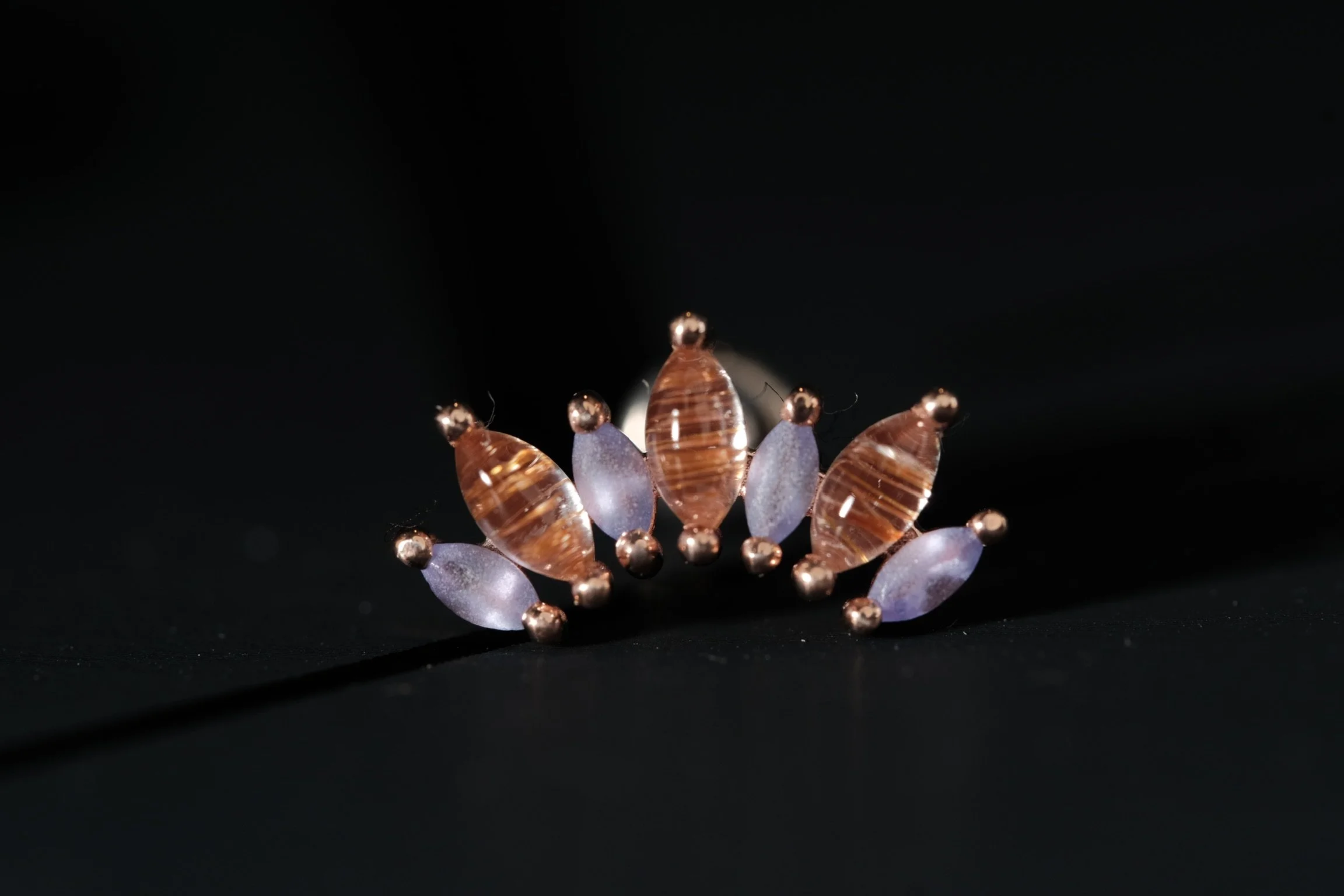
Aftercare for Piercings
Congratulations! You’ve just received an awesome new piercing, and now the healing process begins! On this page, you’ll find aftercare guidelines, dos and don’ts, and suggested products to use to help keep your new piercing clean during the healing process.
Cleaning Solutions
• Use prepackaged sterile saline (0.9%) labeled for wound care.
• Ingredients should list only 0.9% sodium chloride (purified water is also acceptable).
• Avoid products with added moisturizers or antibacterials.
• Do not use contact lens saline, nasal sprays, or eye drops—they are not suitable for piercing care.
Cleaning Solutions
• Use prepackaged sterile saline (0.9%) labeled for wound care.
• Ingredients should list only 0.9% sodium chloride (purified water is also acceptable).
• Avoid products with added moisturizers or antibacterials.
• Do not use contact lens saline, nasal sprays, or eye drops—they are not suitable for piercing care.
✳︎
Don't touch your piercing
✳︎
Don't use harsh chemicals
✳︎
Clean with saline daily
✳︎
Dry your piercing with non-woven gauze
✳︎ Don't touch your piercing ✳︎ Don't use harsh chemicals ✳︎ Clean with saline daily ✳︎ Dry your piercing with non-woven gauze
Cleaning Instructions For Body Piercings
Wash hands thoroughly before touching or cleaning your piercing.
Spray your piercing with sterile saline for 2–3 seconds in order to flush the area (leave jewelry in while doing this) Avoid rotating or moving jewelry during cleaning, as it can cause irritation. Incidental movement while cleaning/drying is fine.
Dry with clean gauze or single-use towels. Gently remove any crust. Do not use cloth towels, as they can harbor bacteria or snag jewelry.
Rinse at the end of every shower. Let warm water rinse the area for 15-20 seconds, rinsing off any shampoo, conditioner, or oils that may have contacted the area. Follow Dry instructions after showers.
What Is Normal?
Initially: expect possible bleeding, swelling, tenderness, or bruising.
During healing: you may notice discoloration, itching, whitish-yellow fluid that crusts, and tightens around the jewelry. Piercings heal outside-in, so they may look healed before they are. Keep cleaning for the full healing period.
Once healed: jewelry may not move freely—don’t force it. Include cleaning in your regular hygiene routine to avoid buildup.
Tip: Piercings can shrink or close quickly, even after years. If you want to keep it, keep jewelry in.
What To Do
• Wash hands before touching your piercing and handle it only for cleaning.
• Don’t twist or rotate jewelry while healing.
• Exercise is fine—avoid impact and protect from bacteria on gym equipment.
• Change bedding often and wear clean, breathable clothing while sleeping.
• Showers are safer than baths; if bathing, clean the tub first and rinse the piercing afterward.
• Come back for a downsize and follow up in 4-6 weeks, 2 weeks for oral piercings.
• Follow ups are important, as aftercare isn’t one size fits all. Sometimes your piercer may need to help make adjustments to your aftercare, or jewelry sizing during healing.
What To Avoid
• Avoid harsh cleaners (alcohol, hydrogen peroxide, antibacterial soaps, iodine, ointments, Bactine®, BZK products) and over-cleaning, as these can irritate or delay healing.
• Prevent trauma from friction, pressure, excessive movement, rough play, or bodily fluids.
• Limit stress, drugs, caffeine, nicotine, and alcohol.
• Keep cosmetics, lotions, sprays, and charms away.
• Don’t submerge in lakes, pools, oceans, or hot tubs unless protected with waterproof film dressing.
Jewelry
• Keep initial jewelry in place for the full healing period unless size or material causes issues.
• Many piercings need a downsize before fully healed—have changes done by a qualified piercer, generally around 4-6 weeks (2 weeks for oral piercings).
• Always keep jewelry in, as even healed piercings can close quickly. If removal is needed, ask your piercer for a safe alternative.
• Check threaded or threadless ends regularly with clean hands.
• If retiring a piercing, remove jewelry carefully and clean until closed.
• Piercings leave minimal scars but permanently alter the body.
• If infection is suspected, ask your doctor whether jewelry should stay in.
Area Specific Care
Ear/Cartilage & Facial: Keep bedding clean; use the t-shirt pillow trick for fresh surfaces. Disinfect phones, headphones, and glasses; wash hats, scarves, and headbands regularly. Be cautious when styling hair and tell your stylist about healing piercings. Avoid sleeping directly on healing cartilage—use a travel pillow to reduce irritation.
Oral Piercings: Follow same aftercare for cleaning with saline. Since most oral piercings pass through the inside of mouth, rinsing with purified water after eating is suggested. We do not suggest using antiseptic mouthwash after every meal, as it kills too much of the healthy bacteria in the mouth that promote healing. Avoid oral contact, and hot or spicy foods initially. Most oral piercings require an initial downsize at 2 weeks to avoid irritation.
Surface Anchors: Clean buildup under threaded tops with saline or showers. Avoid makeup even after healing. These piercings may be less permanent.
Alternative Aftercare
Aftercare varies by region, climate, and product availability—consult your local piercer for specific advice. If using soap, choose a gentle, chemical-free option and rinse thoroughly; avoid antibacterial soaps. If sterile saline isn’t available, keep the piercing clean by rinsing well in the shower.
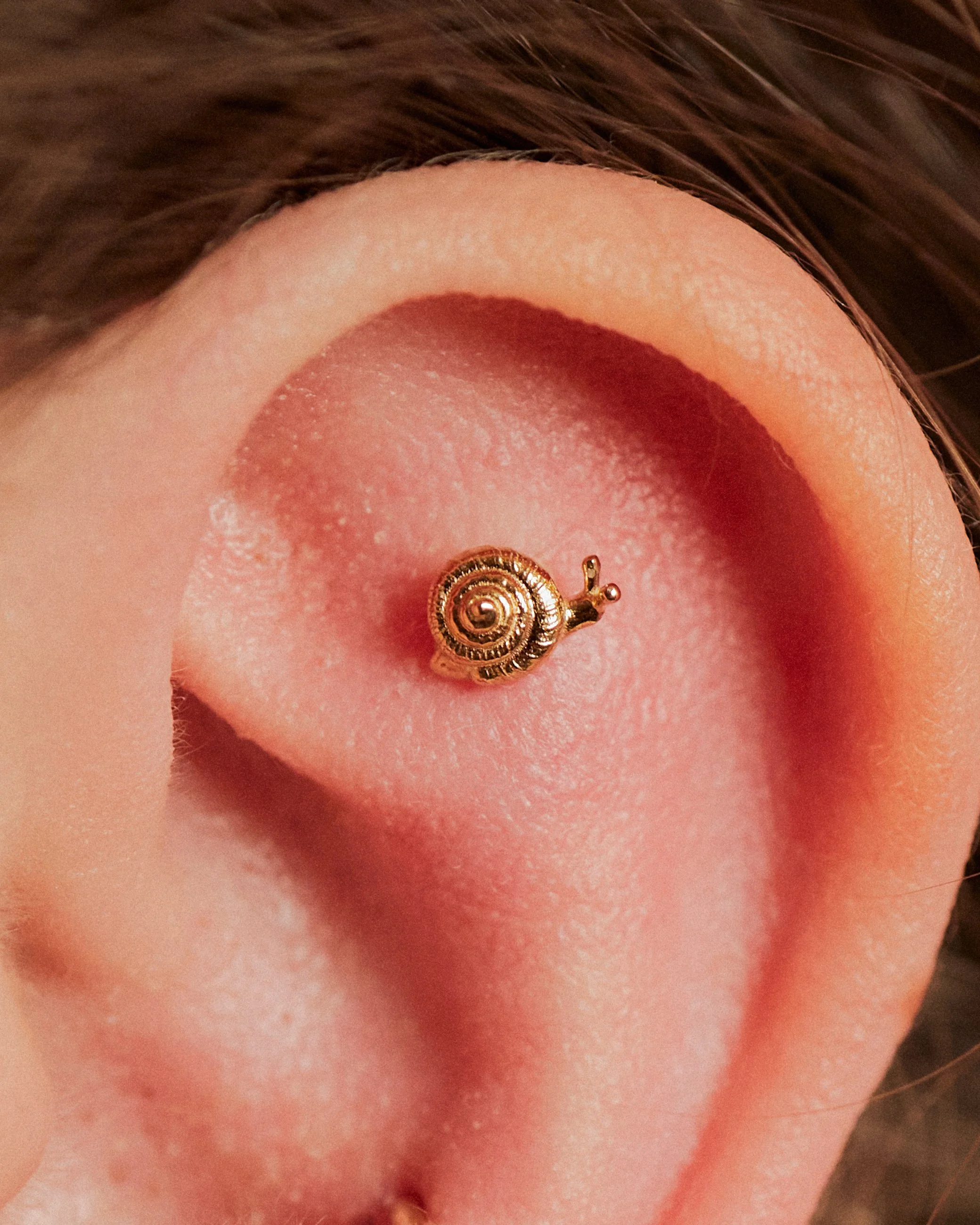
The snail in your ear, telling you to get a new piercing.